12 Principles to Excel and Succeed at Sports
THE INNER GAME OF TENNIS, GOLF, AND LIFE

Introduction
For generations, athletes believed superior performance came primarily from physical strength, technical skill, and relentless practice. Then a quiet revolution began. Writers such as W. Timothy Gallwey in The Inner Game of Tennis (1974), Joseph Parent in Zen Golf (2002), and George Mumford in The Mindful Athlete (2015) challenged that conventional wisdom. They argued the greatest obstacles to excellence are often not external opponents at all but internal distractions and predispositions. Their message was simple yet profound: When the mind becomes calm, attentive and fully present, performance naturally improves all by itself.
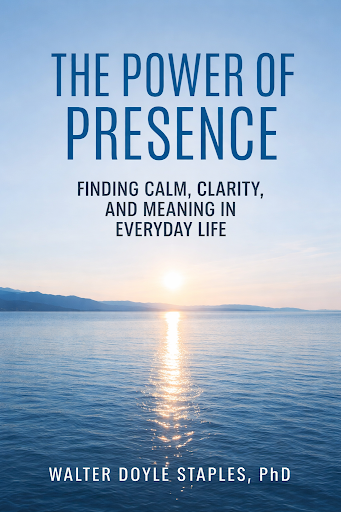
The themes found in these three books reveal a new approach and understanding about success in sports. And while each of these authors approaches the subject differently, they all say one thing consistently: Take control and tell your mind what you want, don’t let it do that for you. The Power of Presence: Finding Calm, Clarity, and Meaning in Everyday Life offers the following 12 principles that bring this advice into practice. Yes! You too can excel in your chosen sport.
1. The Greatest Opponent Is Often Within
Every tennis player faces two opponents: The person standing across from them on the other side of the net and the nauseating little voice that’s always babbling inside their own head. Most athletes spend considerable time studying the strengths and weaknesses of their opponents but pay precious little attention to the annoying internal critic that constantly judges, berates, annoys, and distracts them.
This inner chatter – or noise – produces tension, anxiety, doubt, and hesitation. Players become consumed by their mistakes, scores, or expectations. Instead of responding naturally, they become trapped in “thought.” The first step toward self-mastery is recognizing what the mind is doing and saying, and then interrupting its message. Our mind itself very is often our greatest obstacle to success.
2. Presence Is the Foundation of Excellence
Few people understand the transformative power of being fully present. Presence means giving complete attention to what is happening now, in this moment, rather than dwelling on the past or worrying about the future. The tennis player needs to focus on the ball currently in play. The golfer needs to focus on the shot at hand rather than their scorecard or past failures.
When attention remains in the present moment, distractions fade. The athlete becomes more aware, more responsive, and more capable of performing at a high level. It appears that Presence is the gateway through which all other mental skills emerge.
3. Relaxed Concentration Outperforms Forced Effort
Many athletes mistakenly believe they must “try harder” in order to play better. Yet such thinking often produces the opposite effect. Consider the concept of “focused attention” – a state in which attention is sharp but tension is absent. Think of the difference between gripping a tennis racket too tightly and holding it comfortably. One creates rigidity, the other allows fluid movement. The best performers are intensely focused but not strained or constrained. They are alert but not anxious. Their concentration is powerful because their mind is relaxed.
4. Trust the Wisdom of the Body
Tennis players need to know that their muscle memory is often superior to their conscious mind regarding peak performance. Athletes frequently sabotage themselves by over-thinking their body’s mechanics. They analyze every movement and attempt to consciously control every action that has already been learned through regular practice. The body possesses extraordinary intelligence. Once skills have been developed, performance improves when athletes trust their training rather than continually doubting it. Elite players learn to replace excessive analysis with confidence in their body's proven abilities.
5. Observation Without Judgment Accelerates Learning
Many athletes react harshly to their mistakes. They criticize themselves, become frustrated, and carry negative emotions into subsequent shots. The “inner game” approach proposes something very different. Instead of judging mistakes, simply n-o-t-i-c-e them. Notice where the incoming ball has landed on the court. Notice your swing path. Notice the end result. Objective observation provides useful information. Critical observation does not. When athletes learn to notice without judgment and observe without emotion, they become more calm, adaptable, flexible, and are capable of quick improvement.
6. Acceptance Creates Freedom
A player needs to accept reality – what just actually happened – before attempting to change it the next time. Acceptance does not mean giving up. Rather it means seeing things clearly and objectively. Dispassionately. The shot has already been hit. The ball landed where it landed. An important point has been lost. Fine. Anger or frustration about a given situation is a waste of mental energy. Acceptance frees the mind to focus on the next opportunity. Athletes who accept setbacks recover faster and maintain greater emotional control throughout competition. After all, a match could last two to three hours for women or four to five hours for men.
7. The Breath Is an Anchor to the Present Moment
Most mindfulness-based sports programs teach athletes to use their breath as a way to clear their mind. Slow, deep breathing provides an immediate connection to the present moment. The Now. Before serving in tennis, players should take a slow, deep breath. Before addressing the golf ball, golfers should pause and take a slow, deep breath. This simple practice quiets mental noise, reduces physiological stress, and restores focus. The breath becomes a bridge between awareness and readiness, and performance itself.
8. The “Flow” State Is a Real Thing
Psychologists often describe peak performance as a state of “flow.” In flow, action feels effortless. Awareness is heightened. Time seems to slow down. Performance unfolds naturally and spontaneously. Athletes frequently report that their best performances occurred when they stopped trying so hard and became completely absorbed in the activity itself. The books by Gallwey, Parent, and Mumford also point to this state. Note: Flow cannot be forced, but it can be invited through Presence, trust, relaxation, and acute attention.
9. Emotional Mastery Is a Major Competitive Advantage
Modern sports psychology recognizes that emotional regulation separates good players from the very best ones. Two athletes may possess similar technical skills, yet one remains calm under pressure while the other becomes distracted and overwhelmed. Champions learn to manage fear, frustration, excitement, and disappointment. Yes, both the highs and the lows. They experience emotions without being controlled or impaired by them. In tennis and golf, where momentum can shift quickly, emotional stability often determines outcomes more than physical ability. The athlete who is composed has a significant advantage over competitors who are not. Confidence; comportment; commitment. These three factors are critical.
10. Process Matters More Than Outcome
One of the most powerful lessons from mindfulness-based sports psychology is the distinction between process (the approach) and outcome (the result). Outcomes involve winning, rankings, trophies, money, and accolades. Process involves focus, breathing, affirming, visualizing, positioning, and execution. Athletes have little to no control over specific outcomes but major control over the process itself. Not surprisingly, those who focus on process often achieve superior results. The tennis player who focuses on each successive point usually performs better than the player who is worrying about winning – or losing – the whole match. The golfer who concentrates on making a firm, intentional putt or a smooth swing generally performs better than the golfer who is obsessing over their score, the weather, or another golfer’s particular behavior.
11. Awareness Enhances Performance
Mindfulness is not only relaxation. It is heightened awareness. Feeling confident. The “mindful” athlete notices subtle details that others typically do not:
body tension;
breathing pattern;
emotional reactions;
environmental conditions;
opponent tendencies.
This expanded awareness results in more intelligent decisions and more effective responses. Awareness creates choice. Without awareness, athletes operate automatically without thinking. With awareness, they can make certain adjustments that improve performance.
12. The Lessons of Sport Apply to Life
Perhaps the most enduring theme in this conversation is that the “inner game” extends far beyond sports. The same principles that help a golfer stand calmly over a difficult putt can help a business leader make a difficult decision. The same presence that helps a tennis player return a serve can help a parent listen more attentively to a child. The same awareness that improves athletic performance can improve relationships, leadership, creativity, and personal well-being. Sport is like a laboratory for learning how to live life itself.
Conclusion
The great contribution of books like The Inner Game of Tennis, Zen Golf, and The Mindful Athlete is that they shifted attention from the mechanics of performance to the quality of awareness that lies behind peak performance. They explained that excellence emerges when athletes reduce mental interference, trust their training, stay present, and respond to challenges with calm attentiveness and resolve.
The message is clear: Peak performance is not achieved by forcing excellence but by removing the obstacles that prevent it from happening naturally. For aspiring tennis players and golfers, this means learning to be in the moment. It means replacing harsh judgment with objective observation, apprehension with relaxation, fear with trust, and distraction with confidence.
These lessons are the ones advanced in the new book, The Power of Presence: Finding Calm, Clarity, and Meaning in Everyday Life by Walter Doyle Staples. He summarizes the entire “inner-game” movement this way: “When the mind is calm, still and alert, the body is free to perform at its very best.”
Whether it is on a tennis court, a golf course or in everyday life, knowing we can control our mind by focused conscious effort is undoubtedly one of the greatest discoveries in the long course of human history. We are not a puppet on a string, a cog in a wheel, or a pawn on a chessboard. At least not unless we want to be.
In essence, here is its message:
You can tell you mind what you want in any given endeavor,
whether in sports, acting, business, politics, or academia.
Do not simply accept what your mind wants to tell you:
“You are a failure: You are anxious, weak, afraid,
and frustrated.”
This is your life; best then live it on your terms.
Thank you.


Comments