What is the Source of our Joy?
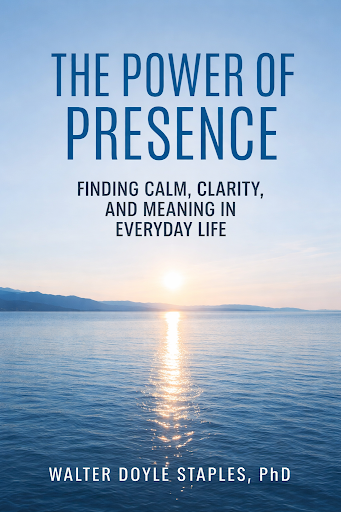
THE BOOK, THE POWER OF PRESENCE

We know life has both its high points and low points. The former often result in positive emotions like happiness, joy or even bliss, and the latter in negative emotions like disappointment, dismay, or even despair. “Good grief,” Lucy says to Charlie Brown. “That’s no way to go through life!” Many things can cause different emotions in different people. Effects are very dependent on age, gender, upbringing, personal beliefs, and culture. As well, some emotions are temporary while others are more permanent. Consider a female and a male at ages five, ten, twenty, thirty, forty, and fifty who live in China, Egypt, India, Brazil, Japan, or Canada. What might bring happiness or joy to each of them at these various ages, whether temporary or permanent? That would be an interesting study indeed.
Few of us ever think to ask ourselves: Do I have a choice in the matter? And if so, what are some possibilities? It seems we do what we always do and simply hope for the best. Seeking pleasure and avoiding pain is the road most traveled. Most of us know through experience that achieving anything of significance requires going through difficulties along the way. It’s that work, that hardship that makes the achievement of the goal worthwhile, isn’t it?
We know what some sources of joy are.
1. family and friends;
2. physical and mental well-being;
3. achievement and growth;
4. meaning and purpose;
5. gratitude and appreciation; and
6. spirituality and connection.
Most people are familiar with the first five categories listed here, while only a few have explored the last one in any serious way. Fine. But if we aren’t experiencing joy each and every day doing what we are currently doing, shouldn’t we consider changing what we are doing? Think for a moment of an electrocardiogram (ECG) that prints out our heartbeat. Now imagine a device that prints out our level of joy on a daily basis. A “daily joy-meter” (DJM) or something. Does the printout look like a simple, flat, parallel line? Or are there small, little blips here and there about every three months? Or is it consistently several notches above the norm, with one large blip after another all the time? Isn’t this something we should explore more? Isn’t joy after joy on a regular basis an important aspect of life … or should be?
Consider an international conference where all the noted mystics throughout history have come together to help answer the question, “What is the source of our joy?” Some possibilities:
Union with the divine (e.g. ultimate reality). Mystics from various religions speak of joy as flowing from union with Source—also called God, Brahman, or the Absolute. Joy arises not from ego but from the dissolution of ego into divine Presence. This joy is described as limitless, peaceful and radiant, beyond what the senses or the intellect can grasp.
Inner stillness and silence. True joy, the mystics say, comes from stillness, silence, and solitude. It’s the place where the soul meets the sacred. Christian mystics call this the “interior castle” while Buddhists call it nirvana. True joy is not stimulation or pleasure but the quiet, still joy of simply being.
Detachment and simplicity. Letting go of desire, attachments, and worldly distractions frees us to experience a deep, stable joy. This isn’t about denial but about freedom from dependence on external things or circumstances for happiness.
Love and compassion. Mystics often say joy springs from selfless love – love for others, love for life, and love for God. This love is not based on possession or condition. It is free-flowing and expansive, natural and spontaneous. Loving fully, mystics claim, is a direct path to divine joy.
Presence and wonder. Abundant joy is found in Now, the present moment. Mystics see God everywhere and in everything: a flower, a bird, the wind, in suffering, as well as in laughter. All lead to stimulation and celebration, a child-like awe and joy that can be had no other way.
Suffering is transformed. Mystics do not deny suffering but speak of it as a gateway to joy when it leads to surrender, purification, and a deeper connection to the divine. Joy in this sense is born from meaning, not avoidance.
Oneness or pure, non-dual awareness. At the core of many mystical traditions is the realization that everything is one. Joy comes from the end of separation, from seeing that we are all a part of a greater whole. This experience can be called ecstatic joy, quiet bliss, or divine intoxication. It’s your choice.
For mystics, joy is not about outside but about inside; not about pleasure but about Presence; not about excitement but about stillness; and not about temporary but about eternal. All this happens once the “self” is seen through, and unity is accepted and cherished each and every moment.
It is important to be awake, aware and alive, and deeply know it. To experience life in all its glorious manifestations, many of which are hidden from our limited conscious awareness. The algorithm we use to live our lives today has been determined by our inherited DNA and social conditioning. But it is fixed in stone forever, only if we stop trying to change it.
Is joy not a kind of celebration? And what kind of celebration is that? Wonder? Gratitude? Would we even know what joy is if we didn’t know what pain is? For example, how would we know that “right” exists if there wasn’t already a “left?” Are not miracles actually everywhere, in full view, all the time, yet we are all too busy to notice them? Does not “ugliness” have its own kind of beauty? And “beauty” its own kind of ugliness? And if so, are not ugliness and beauty pretty much the same thing? Is death really the opposite of life, or is death just life in another dimension? It’s clear today that our survival depends on how each of us uses our minds.
Along with some other things, we need to unthink, rethink, and – most importantly – not-think at all. So, how much of this kind of thinking are you using today? Or is your mind simply like a Ferris wheel that rotates in one large circle, one after another after another?
“There is a crack in everything, that’s how the light gets in.”
– Leonard Cohen
“Nothing can cure the soul but the senses, just as nothing
can cure the senses but the soul.”
– Oscar Wilde
“Mysticism occurs whenever a human being sees the separation between the natural and the supernatural, between the temporal and the eternal, as overcome.”
– Albert Schweitzer
“You will never be able to escape from your heart. So it
is better to listen to what it has to say.”
– Paulo Coelho
Thank you.


Comments