An unwanted, forced Awakening
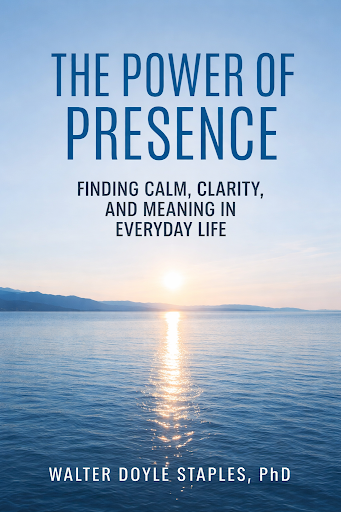
THE BOOK, THE POWER OF PRESENCE

Whether we like it or not, or know it or not, we have but one moment – the present moment – in which to live our lives. Whaaat? you say. Yes, one moment. It’s called Now. This very instant. After all, Now is the only “time” there is. Yesterday happened in Now. Today is happening in Now. Tomorrow, when it comes, will happen in Now.
Questions. Are you using your precious present moments as wisely as you should? Are you learning from your present moments as much as you could? Are you being healed from your present moments as much as you need to be? Sadly, most of us are not. It’s because we think the next moment will be more interesting or productive than Now, the present moment, this particular instant in time.
We always chase after that. When bored or anxious, we check to see if there are any new emails in our inbox. Then we send out several new emails ourselves. Next! Pop, classic, or country music. Next! A game show, sporting event, sitcom, movie, or the latest local and world news on TV. Anything but silence, stillness, serenity, and deep peace. Stimuli are our god, our obsession of choice, and we want more and more of them all the time. Yet such behavior is dangerous, wasteful, and usually unfulfilling. Fact: We are not using our minds in a productive way. We are like a confused, starving fox that is trying to catch snowflakes in the air while plump, white rabbits are hopping all around playing tag.
Imagine this scenario. You have arranged to see your doctor. You explained to her that some things don’t seem right. Your appetite has gone down. You are less able to concentrate on very important things. You are experiencing occasional chest pains that, among other things, are preventing you from sleeping soundly at night. So your doctor asks you to undergo some tests to see what the problem might be. Ten days have passed. You are now back in her office to discuss the results. She begins by exchanging the usual pleasantries: “Nice day.” “How are you?” “How’s the family?” She then says all the test results are in, that nothing is conclusive, but she has concerns. She strongly recommends that some of the previous tests be repeated to ensure accuracy and that some new ones be undertaken. She suggests you both meet again in another two weeks.
After all the tests have been done and the new results are in, what if your doctor tells you that you have only 24 months to live? Or 12 months? Or six months? Or three months? There is nothing like a major event like this to focus the mind, right? Simple things like having coffee with friends are postponed. The usual golf outings or fishing trips up north are put on hold. Family gatherings take on an added significance. Might this be the very last time you see your loved ones? As you think about your immediate family – specifically your spouse and children – you wonder about your finances, last will and testament, and power of attorney. Are they in order? Are they up to date? Strange. Few of us fear death itself, whereas almost all of us are scared silly of dying.
Spending time in Presence involves not-thinking in the place called no-mind. Many of us have practiced being present over the years in order to retreat, find refuge, and escape from a hurtful or stressful situation. Or a chance to calm down, regroup, and get a new perspective. The present moment is unique among all our brain functions. It’s the only one that shuts down our active conscious mind, giving us access to our calm, passive mind. It is unconditioned in the sense that any and all prior programming doesn’t exist there. No ego, no needs, and no wants. It’s simply empty space without any agenda, boundaries, or judgment.
Here, nothing is happening. There is only openness, calmness, and deep peace. We are a non-self, with no identity or personal history that defines us. As such, we have no beliefs, preferences, hopes, or fears. Simply enough, we don’t exist. We are a no-thing that is no-where in a vast sea of nothingness, an innocent observer of a hidden world that can be entered only when we make the effort to stop thinking. We are in a paradise, indeed a utopia that most of us don’t even know exists.
Unfortunately, life experiences can also be a catalyst that forces us into an enhanced, awakened state where every moment of each day is experienced intensely and fully. Whether family, health or employment-related, bad things do happen to good people. Or if we are so motivated, we can be in an awakened state by choice. When we are calm and see clearly, we are better able to deal with the everyday stresses of life. I encourage you to choose the path of stillness, contentedness and peace, and enjoy your moments fully and joyfully. With such a treasure of riches within your grasp, why would you not reach out and take firm hold? Since we all know we have only so many more days left to live, whatever age we may be, it forces us to appreciate more fully each and every moment we have left. It also causes us to introspect and ask ourselves if we are being true to ourselves and the values we claim to cherish.
Consider the five aspects of life we discussed earlier. Truth. Did we search for truth? Did we find truth? Did we live with truth in mind? Goodness. Did we search for goodness? Did we find goodness? Did we live with goodness in mind? Gratitude. Did we search for gratitude? Did we find gratitude? Did we live with gratitude in mind? Beauty. Did we search for beauty? Did we find beauty? Did we live with beauty in mind? Love. Did we search for love? Did we find love? Did we live with love in mind? Our answers may calm and comfort us or concern us. Regardless, we did the best we could, at least with the tools we had at our disposal.
At this point, we are appreciating more fully every minute of our life, giving more importance to Now, this instant in time. We need to ask ourselves, how well did we answer the three most pressing questions we have about our existence, namely “Who am I?” “What am I made of?” And “Why am I here?”
From what you know about your life and have learned from reading this book, do you now have a better understanding of who you are, what you’re made of, and why you showed up and were given the opportunity to be all you can be? It’s much like designing your own report card and then grading yourself regarding how well you performed: A, B, C, D or F. Again, your answers may calm and comfort you or concern you. No matter. You did the best you could with the tools you had at your disposal.
“My place in history will depend on what I can do for the
people and not on what the people can do for me.”
– William Jennings Bryan
(1860 – 1925)
American Statesman, Orator, and Social Reformer
Thank you.


Comments