Baggage, Baggage …
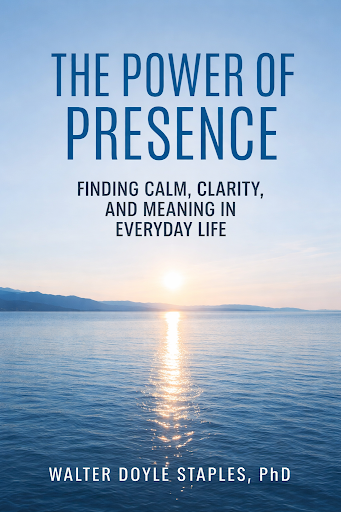
THE BOOK, THE POWER OF PRESENCE

Nature refers to our DNA, our genetic makeup. It’s in our eyes, saliva, skin, blood, bones, glands, and hair. Yes, our toenails too. We each received 50 percent of our DNA from our mom and the other 50 percent from our dad. Ditto for our parents, and their parents in turn. Our DNA represents our genome, our biological footprint. It gives us predispositions for various physical traits – both positive and negative – as well as various character traits, again, both positive and negative. So when our kids blame us – their parents – for all that ails them, they are in fact more right than wrong.
On to nurture. It is the programming we all received from our environment as we were growing up, to about the age of 12. What our parents were like: their attitude, demeanor, habits, and beliefs – both good and bad – and their likes, dislikes, hopes, and fears. Add to this the influence of our relatives, siblings, neighbors, friends, faith, schools, teachers, movies, books, songs, trips, sports, and other enjoyable outdoor activities including camping, kayaking, soccer, swimming, and tennis. Even the air we breathed and the food we ate. Our pets? Yes, of course, them, too.
What about our conception? It was a warm, summer night. There was a soft breeze in the air, the sky was clear, and a thousand bright stars were dancing in the heavens. Then, in an instant, without any warning, up to 300 million sperm from our dad washed over 72,000 eggs in our mom. So, much like the Big Bang, we were conceived. Yippee!
Not without a lot of baggage from both nature and nurture, however. Nine months living in a womb is now followed by twelve years of living in a small enclosure, an area of about one square mile around our house. Baggage? Here is an exchange I can imagine between Lucy and Charlie Brown: “Good grief, Charlie Brown. You are twelve years old, weigh ninety pounds, but are dragging around another one hundred pounds of baggage with you. A fifty-pound bag has nature written on it, and a fifty-pound bag has nurture written on it. What on earth did you do so wrong to deserve all that?” We can only imagine the look on Charlie Brown’s face as the question is asked. Priceless!
So now, we are thirteen, and our seven teenage years until we are twenty have just begun. (Our parents must be in shock!) As noted, nature and nurture are the primary tools in our toolbox, and they are a mixed bag. We didn’t ask for any of them, but we got them anyway. As well, we are becoming increasingly independent, exploring more and more of the big, exciting world on our own. Now we are much like a computer that has been programmed in a very particular way: How to think, imagine, like, dislike, admire, hope and fear, as well as how to mindlessly react to external stimuli. It was easy to be programmed this way in the first place. We just lived each day, and it happened. But there is a potential problem for some, even a nasty time-bomb waiting to go off. It could be a predisposition to a serious illness like cancer or heart disease, or an unfortunate attraction to things like drugs or alcohol. Nature and nurture have done their job well, but always in an imperfect and potentially destructive way.
If we want to make changes along the way, how do we go about doing that? With great difficulty, I suggest. For example, how do we reprogram a computer (like our mind) without turning it off? Good question! As we know, this is where mindfulness – not-thinking – has a major role to play in this regard, as do exercises such as Falun Gong, tai chi, or yoga. Aspects of our true self are also there – they came along with our DNA – and perhaps are reinforced by some spiritual or religious training as we grew up. Importantly, each of us can even increase our IQ as we get older. Some factors, like genetics, influence intelligence and cannot be modified. And that’s fine. But there are other contributing factors that can be controlled and are known to foster improved cognitive function. As a child, they include a supportive home environment, effective parenting style, education, nutrition, as well as being a life-long learner as we grow older.
We know some aspects of our programming are negative and unhelpful, so we have to take steps on our own to make adjustments. Yet at age 13, we have very few skills to do that, not to mention our increasing interaction with the world at large which our new freedom has given us. Hence the road ahead for people will be difficult but most will adjust, manage, and survive. In some cases, even succeed at a very high level. For others, it may well be a hill that is too steep to climb. Along the way, one question in our mind doesn’t go away, and it shouldn’t: Am I living my life or is life living me? So, how much freedom does each of us actually have? Some folks say we have a little, others say a lot. At least most of the time. Or could it be all the time, every day, and in almost every way?
Most of nature – plants, animals, fish, birds, and insects – cannot adapt quickly to either higher temperatures, floods, fires, disease, or drought. That’s because its one and only weapon is natural selection. This can be a lengthy, drawn-out process involving several generations, where some variations in a given species are able to adapt to a major change in the environment. They then become more populous compared to those who could not, and hence, have died. But someone growing up in a poor, run-down neighborhood, faced with bullying, crime, drugs, violence, family dysfunction, poor parenting skills, and low-quality schooling – how many considerations need to be highlighted – doesn’t have much of a chance. They can’t wait generations for natural selection to do what it does. Both parents may be working at low-paying jobs trying to make ends meet, or a single mom or dad is carrying all the burden themselves.
Someone should design an app for that. It could provide detailed information and professional advice to parents, teachers, and community leaders regarding how to mentor and nurture children and teenagers so that not everything is downloaded onto them. Perhaps this app could be called MentorUP. Importantly, I suggest it could also provide relevant information directly to the child or teenager themselves, using words and expressions that they can easily understand. Often a person who is hurting inside doesn’t have someone close to help them, so the goal is to help the child or teenager help themselves in a simple, direct, caring, and non-judgmental way.
Whether we like it or not, the world is changing, and at an ever-increasing rate. It’s up to us adults to help younger generations change with it. No one is saying this is an easy task. But we humans have designed rocket ships that have traveled to the Moon and back. That was on July 20, 1969. Is helping young adults on Earth today to deal with adversity – addictions, poverty, privilege, gender inequality, mental health, peer pressure, violence, and bullying – any less important?
Life is funny, but not everyone is laughing. Many of
us are too sad, too anxious, or too depressed to laugh.
So who is the joke on … life or us?
Thank you.


Comments