Decision-quality Intervention for High-Stakes Leadership
How Presence lessens Emotional Reactivity, Stress, and Ego that Distort Key Decision-Making
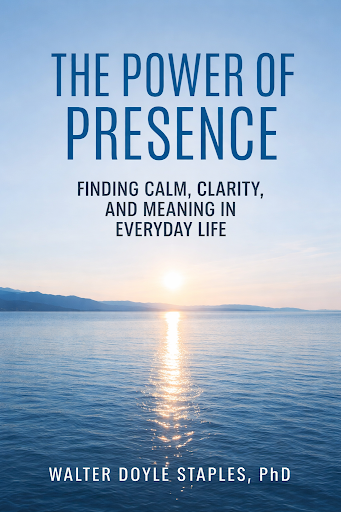
THE BOOK, THE POWER OF PRESENCE

We can’t see clearly when our mind is doing all the thinking
for us. Calm and clarity can only come when we do our own thinking,
on our own terms, and for our own reasons.
In an era defined by geopolitical instability, institutional distrust, rapid technological disruption and escalating psychological pressure, the quality of leadership decisions has become one of the most consequential variables affecting human outcomes. From military command centers and cabinet offices to corporate boardrooms and emergency response teams, leaders are increasingly required to make high-impact decisions in environments saturated with uncertainty, emotional volatility, and compressed timelines. Yet despite extraordinary advances in analytics, intelligence gathering, forecasting systems and strategic planning methodologies, many catastrophic decisions still emerge not from a lack of information, but from distortions in the mind of decision-makers. Fear. Anger. Anxiety. Arrogance. Cognitive rigidity. Emotional disruption. These forces quietly shape perception long before a decision is ever made.
This is where the concept of Presence – as explored in The Power of Presence: Finding Calm, Clarity, and Meaning in Everyday Life – offers an important intervention for modern leadership. Presence is not passivity. It is not withdrawal, softness, or indecision. Rather, Presence is a heightened state of psychological steadiness and awareness – consciousness – in which a leader becomes less dominated by reactive emotional patterns and more capable of calm, clear perception, disciplined judgment, and constructive response. In high-stakes environments, this inner condition may be one of the most overlooked determinants of high quality decision-making.
The Hidden Threat to Leadership: Emotional Distortion
Traditional leadership training often emphasizes strategy, communication, negotiation, operational planning, and execution. These are critically important competencies. However, less attention is typically devoted to the internal psychological state from which all decisions emerge. Under pressure, the human nervous system narrows perception. Threat sensitivity increases. Ambiguity becomes psychologically uncomfortable. Leaders can unconsciously begin defending identity rather than evaluating reality. In such moments, dissenting viewpoints are discounted, adversaries become caricatured, escalation feels emotionally satisfying, and certainty becomes falsely attractive. History repeatedly demonstrates that major organizational and geopolitical failures are frequently preceded by emotionally distorted decision environments. Leaders surrounded by stress, ego reinforcement, ideological rigidity, or possible embarrassment often lose the capacity for rationality and balanced assessment. The problem is not simply intellectual error, it is reactive consciousness. We know that Presence interrupts this process.
Presence as a Decision-Quality Stabilizer
Presence may be understood as a disciplined psychological condition characterized by heightened self-awareness, emotional regulation, attentional clarity, reduced ego defensiveness, and greater perceptual openness. A leader operating from Presence is still capable of decisive action, but their judgment is less contaminated by impulsive emotional reactivity. This distinction is critical. In many high-pressure situations, leaders do not actually respond to objective reality, they react to their internal interpretation of various threats. The nervous system becomes overloaded, identity becomes fused with outcome, and cognitive flexibility weakens. Presence creates psychological important space between stimulus and response. That space often determines whether a leader escalates conflict unnecessarily, dismisses crucial intelligence, humiliates opponents, overreacts publicly, or makes fear-based decisions that produce long-term instability. By reducing internal noise, Presence enhances the ability to absorb complexity without panic, tolerate uncertainty without aggression, hear criticism without collapse, and delay impulsive reactions until clearer, more rational judgment emerges. In this sense, Presence functions as an important form of decision-quality intervention.
The Relationship Between Ego and Poor Decision-Making
One of the most destabilizing forces in leadership is unmanaged ego attachment. When leaders psychologically equate disagreement with disrespect, compromise with weakness or uncertainty with incompetence, decision-making quality deteriorates rapidly. Protecting self-image begins to override protecting organizational or societal well-being. Ego-driven leadership environments tend to produce reduced dissent, performative certainty, polarization, retaliatory thinking, and excessive personalization of conflict. Presence weakens the grip of ego identification by encouraging leaders to observe their internal reactions rather than unconsciously become them. This is not merely philosophical. It has important practical implications. A leader capable of recognizing “I am being defensive,” “I am reacting emotionally” or “My notion of self is entangled with this outcome” is already operating at a higher level of cognitive and emotional sophistication than a leader unconsciously driven by those same forces. Presence therefore strengthens executive functioning by reducing the degree to which emotional impulses dominate strategic reasoning.
Stress, Cognitive Narrowing, and Escalation
Under acute stress, the brain naturally prioritizes survival-oriented thinking: fight, flight, or freeze. This can be advantageous in immediate physical danger but is problematic in complex, high quality environments where nuanced and balanced judgment is required. High stress contributes to tunnel vision, reduced creativity, increased hostility, diminished listening capacity, and simplistic “win-lose” framing. In international relations, military operations, law enforcement, healthcare systems and corporate leadership, this narrowing effect can produce dangerous cycles of escalation. Presence acts as a stabilizing counter-force. It is through conscious-awareness practices, reflective pause, attentional discipline, and emotional regulation that leaders can reduce the intensity of automatic stress reactions. As physiological arousal decreases, cognitive flexibility improves. This has enormous implications for diplomacy, crisis negotiation, executive conflict management, military command, and organizational leadership. A leader under control regulates the people, circumstances, and the situation at hand. Alternatively, an emotionally dysfunctional leader often transfers instability into the entire system they influence.
Presence and the Ethics of Leadership
Presence also deepens ethical clarity. Many harmful decisions are made not because leaders are inherently malicious but because stress, ambition, fear, tribal identity, and emotional momentum impair reflective judgment. Presence slows this momentum. It encourages leaders to ask, “What consequences might emerge from this reaction?” “Am I trying to solve this problem or merely protect my ego?” “What information am I actively resisting?” “What negative human impact could result from this decision?” and “Is escalation really necessary?” Such questions do not weaken leadership, they strengthen it. Indeed, some of the most respected leaders in history demonstrated not impulsive aggression, but disciplined restraint under pressure. The capacity to remain emotionally grounded amid provocation may represent one of the highest forms of leadership maturity.
Toward a New Leadership Paradigm
Modern civilization has invested heavily in external systems of power including military, economic, technological, political, and informational. Far less investment has been devoted to the cultivation of inner power, however, namely the psychological condition of those who wield such power. Yet the emotional maturity of decision-makers themselves may now be one of the defining security issues of the 21st century. A leader with immense authority but little self-awareness can destabilize institutions, nations, and whole populations. By contrast, leaders trained in Presence may demonstrate greater resilience, balance, emotional maturity, and wisdom under pressure. This suggests the need for a new interdisciplinary field of leadership development – one that integrates neuroscience, psychology, conflict studies, executive education, contemplative awareness, and strategic-decision science. The objective would not be ideological conformity or emotional suppression. Rather, it would be the cultivation of leaders capable of clear perception and wise action amid uncertainty, danger, and volatility.
Conclusion
The future of peace, stability, and institutional trust may depend less on whether humanity acquires more power, and more on whether human beings can develop the internal capacity to wield power wisely. Presence offers a practical pathway toward this development. By reducing emotional reactivity, stress distortion and ego-driven defensiveness, Presence enhances decision quality in moments where consequences are greatest. It strengthens clarity without diminishing strength. It supports restraint without weakening resolve. It allows leaders to thoughtfully respond rather than automatically react. In a world increasingly shaped by acceleration, outrage, polarization and pressure, Presence may no longer be a simple luxury or personal wellness concept. It may be an operational necessity for responsible leadership itself. And perhaps, in the years ahead, the leaders most capable of preserving peace will not simply be those with the greatest force of conviction or intention, but those with the greatest mastery over their own manner of thinking, their own cognitive skills, their own inner consciousness.
Comments from Colleagues
“A powerful and disciplined call to rethink how peace,
order, and good government are created, starting with the
workings of the mind of every leader.”
“Transforms Presence into a strategic advantage for navigating
conflict, complexity, and high-stakes decision-making.”
“A rare blend of clarity and depth, this book redefines the search
for peace as a proactive, learned, and practiced competency.”
“Cuts through noise and ideology to offer a grounded, actionable
framework for more thoughtful and effective leadership.”
“A compelling blueprint for shifting from reaction to
intentional leadership in an increasingly volatile world.”
“Timely, practical, and deeply relevant. This book belongs in
the hands of today's and tomorrow's decision-makers.”
“An important contribution to how we understand conflict,
organizational leadership, and the human factors that shape both.”
“Clear, grounded, and immediately applicable.
The Power of Presence offers a new standard for intentional
leadership and wise action under pressure.”
Thank you.


Comments