How to Live, Love, and Learn
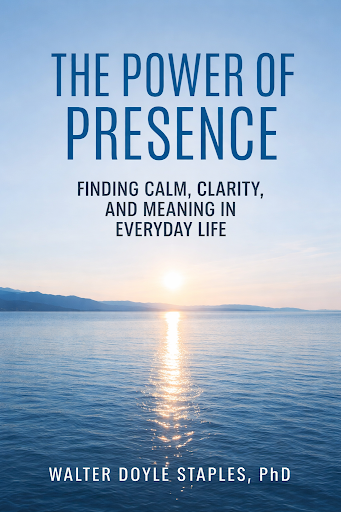
THE BOOK, THE POWER OF PRESENCE

Leo Buscaglia’s 1985 book, Living, Loving & Learning, arrived at a time when AIDS was a major concern in America. We were all hungry for warmth, connection, and emotional honesty. His unique message was disarmingly simple: The quality of our lives is determined less by achievement and more by our capacity to love, be present with one another, and to live with open-hearted, deep-seated awareness.
Now, four decades later, my book The Power of Presence, continues this same conversation, translating Buscaglia’s timeless wisdom into a modern context shaped by anxiety, distraction, and digital overload. Together, the two works form a unified narrative: When we learn to be fully present – to ourselves, others, and to the moment – health, joy, love, and meaning naturally follow. Buscaglia believed most people are not truly living, rather they are rushing about, worrying, and postponing life. (They are being thunk!) He wrote as if trying to shake his readers out of their complacency. His many lectures around the world became legendary because he treated love not as a notion or sentiment but as a daily practice.
For Buscaglia, love and attention were the same. It was listening without interruption, showing up without masks, and choosing vulnerability over emotional distance. In this sense, Buscaglia’s philosophy was an early articulation of what today we call Presence. It expands on Buscaglia’s insight into a comprehensive practice for the modern world. Where Buscaglia encouraged us to love more deeply, Presence explains how to cultivate the mental and emotional conditions that make love possible. Presence begins with awareness – deep seeing, deep listening, deep breathing, and deep thinking. These practices quiet the anxious mind and reconnect us with the immediacy of life. They allow us to experience what Buscaglia described as our aliveness: the felt sense that life is happening right now, this very moment, and not someday.
The connection between Presence and mental health is foundational. Modern life places the nervous system under constant strain. Buscaglia observed that fear and loneliness were among the greatest sources of human suffering. Today, science confirms what he intuited: Chronic stress erodes both physical and mental well-being. Yet Presence interrupts this cycle. When we breathe slowly, focus our attention and step out of the relentless stream of thought, the body shifts from survival mode into restoration. The heart rate slows down, blood pressure drops, muscles soften, and clarity returns. Presence is not merely a philosophical ideal; it is a biological necessity. From health flows joy. Buscaglia famously celebrated joy as a birthright, yet he lamented how often people denied themselves permission to experience it. Joy, he believed, emerges when we allow ourselves to engage life fully. Presence offers the pathway. Joy does not live in the past or future; it exists Now. Whether it is the taste of morning coffee, the sound of laughter or the warmth of sunlight on skin, joy becomes visible when attention is deliberate. The practice of Presence teaches us to notice these small miracles, transforming ordinary moments into priceless sources of nourishment.
Love, the centerpiece of Buscaglia’s work, becomes the natural expression of a present mind. When we are distracted, we cannot truly connect: Conversations become transactional, relationships become functional, and intimacy fades. He believed the greatest tragedy of modern life was emotional distance, and that Presence dissolves that distance. Deep listening allows another person to feel seen and appreciated. Eye contact becomes meaningful rather than fleeting. Silence becomes comfortable rather than awkward. Through Presence, relationships shift from performance to interconnectedness.
This integration of Buscaglia’s philosophy and the practice of Presence also speaks directly to meaning and purpose. Many people search for purpose as if it were a destination. Buscaglia suggested something more radical: Meaning emerges from how we live, moment by moment. Presence transforms purpose from a distant goal into a daily practice. When we give our full attention to the task at hand – writing an essay, helping a friend, or preparing a meal – we transform ordinary actions into meaningful ones. Life becomes less about chasing significance and more about embodying it.
Another shared theme between the two works is courage. Buscaglia repeatedly urged his readers to risk being fully human. Presence requires the same bravery. To be present is to stop hiding in distraction. It means feeling emotions fully, acknowledging uncertainty, and embracing vulnerability. This courage brings freedom. When we stop running away from experience, we discover that life is not something to fear but something to participate in, to rejoice in.
Today, when attention is fragmented by bright screens and constant stimulation, the combined message of Buscaglia and The Power of Presence feels more urgent than ever. The practice of Presence becomes a form of resistance against the culture of distraction. It is a quiet rebellion that says – this moment matters! Ultimately, the integration of these two works reveals a simple yet profound truth: Presence is the soil from which the best parts of life grow. Health arises when we calm the nervous system and reconnect with our body. Joy appears when we notice the beauty that is already all around us. Love flourishes when we offer undivided, focused attention. Meaning unfolds when we treat each moment as worthy of care. Buscaglia encourages us to really live by loving and learning. The Power of Presence shows us how to do it – one breath, one moment, and one act of attention at a time.
Presence reshapes our relationship with ourselves. Buscaglia emphasized self-love as the starting point for loving others. Without self-acceptance, love becomes conditional and fragile. Presence encourages us to notice our own thoughts and emotions without harsh judgment. Instead of rushing to fix or suppress discomfort, we learn to sit with it. This compassionate awareness fosters resilience and self-trust. When we treat ourselves with kindness, we naturally extend that kindness outward. In professional life as well, the integration of love and Presence creates environments where creativity and collaboration flourish. A leader who listens attentively inspires loyalty. A colleague who offers full attention fosters mutual respect. Buscaglia believed places of work should be communities of human beings rather than a collection of individual roles. Presence humanizes professional interactions, turning tasks into shared effort instead of individual, isolated responsibilities.
Solitude itself is richer through Presence. Many people fear being alone because they associate it with loneliness. Buscaglia, himself, refuted this assumption, suggesting that solitude can be a space for renewal. Presence transforms solitude into a sanctuary. Sitting, reflecting, observing, or deep breathing becomes an opportunity to reconnect with the self’s calm inner core. This nourishment in turn strengthens our capacity to connect with others.
The practice of Presence also deepens gratitude. Buscaglia frequently celebrated the beauty of ordinary life – the laughter of friends, the change of seasons, the gift of breath. Gratitude emerges naturally when we slow down and notice what is currently present. Instead of constantly chasing novelty, we rediscover wonder in familiar places. This shift from scarcity to appreciation enhances emotional well-being and cultivates joy. Presence also helps us navigate pain and loss. Buscaglia didn’t deny suffering; he acknowledged it as part of the human condition. Presence allows us to face grief without becoming overwhelmed. By staying with our emotions rather than trying to flee from them, we honor the depth of our love. Grief, in this sense, becomes evidence of connection rather than something to be avoided. Presence offers the stability needed to move through difficult experiences with self-compassion and understanding.
Spirituality also reveals itself through Presence. Whether by quiet contemplation, mindful meditation or deep prayer, many traditions emphasize the importance of stillness. Presence provides the mental space to experience awe, wonder, and amazement. Buscaglia’s strong message resonates across spiritual perspectives: When we slow down, we become receptive to the mystery and beauty of life.
The integration of Buscaglia’s work and The Power of Presence offers a hopeful vision. It suggests that the good things in life are not distant rewards but immediate possibilities. Love is available in a conversation, joy in a moment of attention, meaning in a simple task. Presence reveals these possibilities by bringing us fully into the here and now. In a world often defined by speed and distraction, this message is both radical and reassuring. It reminds us that fulfillment does not require extraordinary circumstances. It simply begins with a deep breath, a gentle pause, and keen awareness. Buscaglia taught us how to live, love, and learn. And The Power of Presence shows us how to embody these ideals in everyday life. Together, they offer a timeless and heartfelt invitation: Slow down, open your heart, and discover the richness already waiting in each moment.
“The easiest thing to be in the world is you. The most
difficult thing to be is what other people want you to be.
Don’t let them put you in that position.”
– Leo Buscaglia
(1924 – 1998)
American Author, Motivational Speaker,
Author, Living, Loving & Learning (1986)
Thank you.


Comments