What Evolutionary Biology can Teach us All
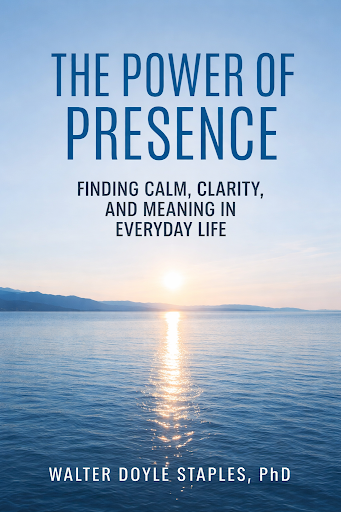
THE BOOK, POWER OF PRESENCE

Are you fidgety, anxious, nervous, or stressed? Even about to erupt, at least occasionally? Can your approach to life be described as “fire, ready, aim?” If so, there are good reasons for that. It’s called ancestral pain, and it affects us all in a variety of ways. As a result, it is important to explore approaches we can use to help reduce its often depressing and debilitating effects.
We all have this – ancestral pain, basically negative energy – that has been ingrained bit by bit into our psyche, generation after generation. It’s always at the ready to assert itself because it holds a grudge: It feels maligned, mistreated, and abused. As such, it is much like a huge black cloud – lingering curse or necessary evil – that we have inherited just by being born. It is a big part of what is called the human condition. (See the definition below.) This energy, in turn, feeds the ego in all of us that is always looking for a chance to manipulate our thinking, usurp our power, and cause us grief.
“In psychology, the human condition refers to shared universal experiences, challenges, and characteristics that define human existence. They encompass various physical realities – birth; aging; and death; emotional landscapes – love; loss; joy; suffering; and conflict; and cognitive aspects – consciousness; morality; aspiration; and meaning-seeking). All this highlights the paradoxical nature of being human: Capable of demonstrating great kindness as well as inflicting great pain, often struggling with internal conflicts between instinct and reason, and searching for purpose in a finite, confusing, and precarious life.” Source: Wikipedia; others
Our ancestors endured inestimable hardship that we can only imagine today. This is why the life spans of our earliest ancestors were often less than half of what they are today. Consider famine; floods; disease; drought; wild animals; wars (some large, many small); forest and greenfield fires; both very high and very low temperatures; plagues; poison; earthquakes; tsunamis; tribal sacrifice; and slavery. The memory of all this adversity, trauma, and loss has been passed down by successive generations to you and me. Life is a “seize the moment” exercise where all we have is the moment at hand to exercise our power. Surely we know by now that tomorrow never comes and yesterday is already a distant memory. Simply enough, life came, lingered briefly, then left. Presence was ignored. In but a millisecond, another opportunity to take meaningful action has passed us by.
The curse of the ages is ancestral pain that is still a large part of the life we are living today. We are all much like a battered steel anvil in a smoky blacksmith shop, or a punching bag in a noisy gym that has been used and abused, often over a decade or two. Yes, we all have deep emotional scars that are invisible to the naked eye. In other words, our biological history includes a few trillion trips to hell and back. These experiences still haunt us today, and will continue to do so until the day we die. Yet there is hope. While we cannot totally escape from our ancestral past, we can certainly learn from it and use it as motivation to move beyond it.
The “Pleasure-Pain” Principle
Most of us have heard about the pleasure-pain principle developed by Sigmund Freud in 1911. It suggests that people make choices either to avoid or decrease pain or to create or increase pleasure. Said another way, we all want to avoid pain in our lives as much as possible and experience pleasure as much as we can. The pleasure-pain principle lies at the core of every decision we make. All our core beliefs, values, and actions are built upon this totally ego-based principle. Of course, we have all become desensitized to this behavior because we have never acted any other way. But imagine for a moment the potential for disagreement and conflict that such behavior is able to create. This, along with the principle’s main corollary, says we each want to do as little as possible in our lives in order to get as much as we can. Consider a forest where a select group of trees adopts this philosophy. Or worker bees in a hive. Or certain Arctic caribou who feel privileged in a herd. It’s very much an “each for one and none for all” approach to life. Although it is what it is, we needn’t just accept it at face value. We can work with it by understanding it and finding creative ways to lessen its impact.
Consider these statements: 1. We have all been negatively impacted physically, mentally, and spiritually by the many ups and downs of all those who went before us. 2. We are all like small ships in a big pond that were birthed by a much larger mother ship. Naturally, we inherited many of her flaws, some of her experiences became our experiences, and often her hurts and sorrows became our hurts and sorrows. To note, her destiny may be our destiny as well – unless we wake up. 3. Active, compulsive thinking is where the ego lives, flourishes, and reigns supreme. This is its domain, its power base, its home territory. It isn’t going anywhere without a fight. 4. We progressed from being primarily instinctual beings to being active, conscious, thinking entities. This was considered important progress at the time. But now we don’t think so much “ourselves” as compared to actually being “thunk” by forces we assume are beyond our control. Now the cat is out of the bag! Active thinking is now our default mode, and it is driving most of us crazy.
The solution to this dilemma involves finding a way to transcend the dreaded ego by entering the state of calm acceptance and simple surrender. We have to step out of the active thinking mode of mind and enter no-mind, where we experience only our being and our basic “is-ness” – the essence of who we are. In other words, “The Soul’s Code,” as James Hillman’s 1996 book by that name tells us. This involves learning a new skill that can take us to untold heights in our lives. Do you know what this skill is? Do you know how to learn it, indeed master it? If not, then be patient. It is explained in detail in the pages that follow. But be forewarned. This new skill is alarmingly simple yet is exceptionally powerful. And, without doubt, it is life-changing. Would you want it any other way?
A Call to Action
The ball is now in our court. We have only to seize the moment and be the instrument of change in our life. We need to stop being managed and manipulated by forces that are foreign to us and clearly don’t have our best interests in mind. The goal? It is to be free, meaning able to think or not-think by conscious choice, and accept the results as our results, not the results of evolutionary biology.
“The greatest human quest is to know what
one must do in order to become a human being.”
– Immanuel Kant
(1724 – 1804)
German Philosopher
Author, Critique of Pure Reason (1871)
Thank you.


Comments