What the Cosmos Teaches Us About Being Human
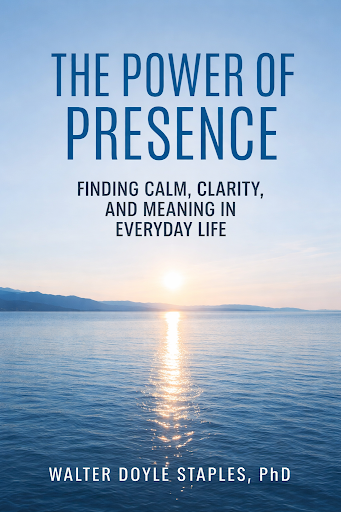
THE BOOK, THE POWER OF PRESENCE

From the earliest civilizations to the age of space telescopes and interplanetary probes, human beings have always lifted their eyes up to the night sky. Long before we could measure galaxies or map cosmic background radiation, we sensed that the heavens carried meaning. Today, as we study outer space with unprecedented scientific precision, we are discovering that the cosmos does more than explain where we came from. It helps us understand who we are and how we might live more wisely on a fragile planet that is facing serious challenges.
At a basic level, the study of the cosmos offers perspective. Earth, viewed from space, is a small blue sphere suspended in a vast expanse of darkness. There are no visible borders, no signs of any conflicts or divisions. Astronauts often describe this experience as the “overview effect” as deeply transformative. Seeing Earth as a single, delicate ecosystem fosters humility and a sense of great responsibility. Our personal problems, while still very real, are seen within a larger context. This shift in perspective does not diminish human struggle; rather, it dignifies it by reminding us that every life unfolds within an extraordinary cosmic context.
Cosmology also teaches us about impermanence. We know stars are born, burn brilliantly for millions or billions of years, and eventually die – sometimes quietly, sometimes in spectacular supernovae that scatter various elements of life across space. Everything we know, including our own bodies, is composed of these ancient stellar remnants. As physicists often note, we are literally made of stardust. This realization dissolves the illusion of separateness. The atoms in our bones were forged in dying stars long before Earth was formed. In this sense, hardship and change are not aberrations; they are woven into the very fabric of cosmic existence.
Understanding this cosmic cycle can help humans develop resiliency. When we face loss, uncertainty or failure, it is tempting to interpret these experiences as personal shortcomings or signs of defeat. The universe tells a different story: Creation itself depends on destruction and transformation. Nothing evolves without pressure, and nothing meaningful endures without change. In seeing ourselves as participants in this vast process, we can reframe hardship as a catalyst rather than as a condemnation.
The cosmos also confronts us with limits, another essential lesson for human flourishing. Despite our technological prowess, we are a species bound by physical laws we did not create and cannot escape. Gravity, entropy, and the speed of light impose constraints on us that no amount of ambition can overcome. Far from discouraging us, these limits invite wisdom. They encourage humility, cooperation, and careful stewardship of resources. On Earth, many of our crises – climate change, biodiversity loss, and social inequality – stem from the illusion of limitless growth. Space reminds us that sustainability, not domination, is the true measure of intelligence.
At the same time, space exploration embodies human curiosity and courage. To study the cosmos is to affirm that wonder itself is a survival instinct. Throughout history, societies that stopped asking questions stagnated, while those that cultivated inquiry flourished. In moments of hardship – whether personal or collective – curiosity keeps us moving forward. It allows us to imagine alternatives, discover new tools, and re-envision our future. The same spirit that sends probes to distant planets can help individuals navigate uncertainty with optimism and openness rather than fear.
The vastness of the universe also reshapes our understanding of meaning. In a cosmos containing hundreds of billions of galaxies, it is easy to feel insignificant. Yet significance is not measured by size. One human life may be brief on a cosmic timescale, but it is uniquely capable of awareness, compassion, and choice. We are the universe reflecting on itself. Every act of kindness, creativity, or moral courage matters precisely because it is rare and fragile. The night sky does not diminish human value; it amplifies it.
To note, studying outer space reinforces the power of Presence. Astronomers know that to observe faint, distant objects, we must slow down, reduce noise, and pay close attention. Rushed observation yields nothing of consequence. This mirrors an essential truth of life: clarity arises from stillness. Just as the cosmos reveals itself over long exposures and patient measurement, self-understanding emerges when we pause, reflect, and become fully present to our experience. In a crazy world saturated with unlimited information and distraction, the discipline of cosmic study quietly models a new way of being.
Finally, the cosmos invites shared identity. From space, humanity is not divided into individual cities, countries, religions, or ideologies. We are one species on one planet, traveling together through a vast and seemingly indifferent universe. This realization can be a powerful antidote to our usual fear-based thinking. It’s clear that cooperation is not a moral luxury but a practical necessity. Thriving in the face of hardship – whether environmental, psychological, or social – requires a planetary mindset that is rooted in solidarity.
In the end, studying outer space does not pull us away from Earth. Rather, it brings us home armed with new understandings and clearer eyes. It teaches us humility without gloating, ambition without arrogance, and resilience without pretense. By understanding our place in the cosmos, we gain the wisdom to meet life’s challenges with perspective, courage, and care. The stars remind us that while we may seem small, we are in fact colossal, and that thriving – like the universe itself – is an ongoing act of blossoming and becoming.
Joy is not in things; it is in us.”– Richard Wagner
“In quietness are all things answered.”– Dag Hammarskjold
“Curiosity is, in great and generous minds,
the first passion and the last.”– Stephen Hawking
“Not only are we in the universe, the universe is in us.”– Neil deGrasse Tyson
“The universe seems neither benign nor hostile,
merely indifferent.”– Carl Sagan
Thank you.


Comments